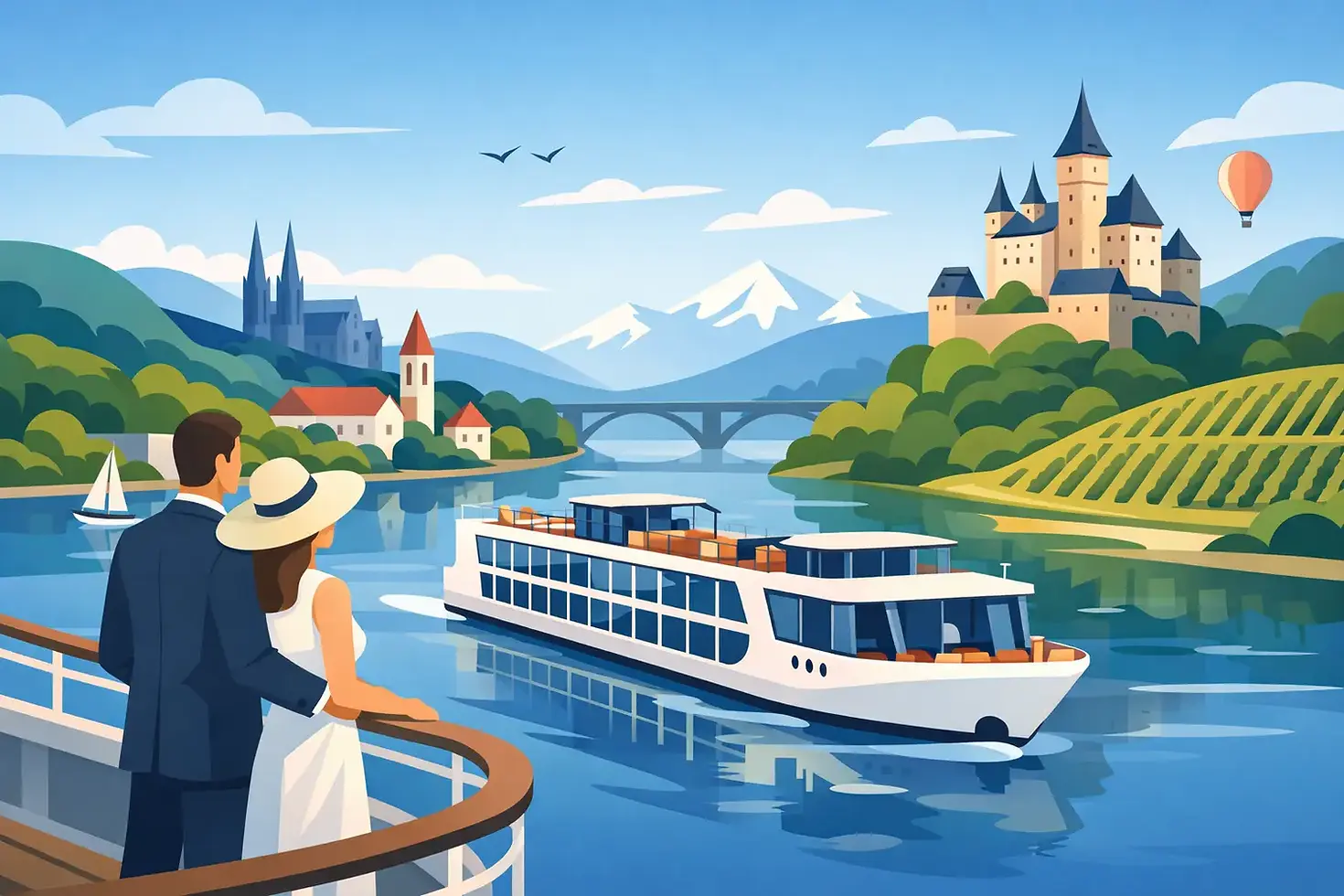
European River Cruise Guide for Luxury Travellers
A fine river cruise can feel less like transport and more like settling into the rhythm of a continent. The right European river cruise guide should not simply name the Danube or Rhine and leave you to sort the rest. It should help you understand which waterway suits your style of travelling, how the ships differ, and where luxury genuinely shows itself - in the details, not the gloss.
For travellers who value comfort, culture and calm, Europe’s rivers offer a particularly civilised way to move through storied landscapes. You unpack once, wake to vineyard hillsides or elegant capitals, and spend your days in places that were built to be approached by water. Yet not every river cruise feels the same, and not every itinerary suits every traveller. That is where careful selection matters.
How to use this European river cruise guide
The first decision is not the cruise line. It is the kind of experience you want to have. Some guests want a grand sweep of capitals and concert halls. Others want slower days among wine villages, abbeys and market towns. Some prefer a sociable ship with a lively atmosphere, while others want quiet sophistication, generous suites and a more measured pace.
River cruising is often presented as interchangeable, but it is not. The route shapes the mood, the season changes the experience, and the ship determines how restful the journey feels. A well-chosen sailing can feel deeply personal. A poorly matched one can feel busy, repetitive or simply not worth the fare.
Which European river suits you best?
The Danube
The Danube suits travellers drawn to imperial history, classical music and a varied cultural backdrop. It links grand cities such as Vienna, Budapest and Bratislava, often with stretches of countryside that soften the rhythm between urban days. If you like the idea of art, architecture and old-world elegance, this is often the most satisfying first river.
The trade-off is popularity. Prime Danube itineraries are in high demand, and the best sailings can feel quite social. That is not a drawback for everyone, but if privacy and a very hushed onboard atmosphere matter most, ship choice becomes especially important.
The Rhine
The Rhine is ideal for travellers who want iconic scenery with a polished, accessible feel. Castles, vineyard slopes and handsome old towns create a classic European picture, particularly through the Middle Rhine. It is often a strong fit for first-time river cruisers because the route is easy to understand and consistently rewarding.
It can, however, feel more familiar and more travelled than some alternatives. If you are looking for a route with stronger cultural contrasts from one stop to the next, the Danube may offer more variety.
The Douro
Portugal’s Douro appeals to guests who prefer warmth, wine country and a slightly more intimate sense of place. The scenery is striking, with terraced hills and a slower, more contemplative pace. It tends to attract travellers who are less interested in ticking off famous capitals and more interested in atmosphere, cuisine and landscape.
This is not the river for constant marquee sights. Its appeal is quieter. For the right traveller, that is exactly the point.
The Seine, Rhône and Saône
France’s rivers are particularly attractive for those who prioritise gastronomy, art and a distinctly regional experience. The Seine works beautifully for Paris and Normandy, while the Rhône and Saône suit travellers who want sunlit towns, vineyards and a more sensory style of travel built around food and culture.
These itineraries often feel elegantly themed rather than broad in scope. If your idea of luxury includes unhurried lunches, local wines and beautifully layered history, France is often an excellent choice.
Choosing the right ship matters more than most travellers expect
A river ship is not simply a floating hotel. It shapes how you rest, dine and move through the journey. In luxury river cruising, differences are often subtle but meaningful.
Suite size matters, particularly on longer itineraries. So does the layout of public spaces. Some ships are designed for conviviality, with more animated lounges and a busier social rhythm. Others feel serene and residential, favouring space, privacy and a softer atmosphere. Neither is inherently better. It depends on how you like to travel.
Dining is another dividing line. On some ships, the culinary programme is pleasant but secondary. On others, it is a defining part of the experience, with stronger regional influence, finer ingredients and more thoughtful wine pairings. If meals are central to your holiday, this should never be an afterthought.
Then there is service. True luxury on the rivers is rarely theatrical. It shows up in how smoothly the staff handle changing water levels, special requests, transfers, pacing and the small adjustments that make a journey feel effortless.
When to sail
Season has a remarkable effect on a river cruise. Spring brings blossom, fresh vineyards and a softer pace before the height of summer. It is often one of the loveliest times to sail if you prefer moderate temperatures and a lighter feel in the ports.
Summer offers long days and energy, though popular routes can be busier and warmer than some travellers expect. For those who enjoy outdoor dining and lively quaysides, that may be part of the pleasure. For others, it can take away from the sense of calm.
Autumn is frequently the sweet spot for seasoned travellers. Harvest season gives many itineraries a richer atmosphere, especially on wine-focused rivers such as the Douro, Rhine and Rhône. Colours deepen, markets feel abundant, and the overall mood is often more relaxed.
Festive market cruises have their own charm, particularly on the Rhine and Danube. They are atmospheric and visually enchanting, but they are also more thematic and often shorter. They work best for travellers who want a seasonal interlude rather than a comprehensive cultural journey.
What luxury travellers should consider before booking
The finest itinerary on paper can disappoint if it does not suit your pace. This is especially true for mature travellers who have already seen much of Europe and are no longer interested in rushing through destinations simply to say they have been there.
Excursion style is one of the most overlooked considerations. Some cruise lines include a broad menu of touring options, from gentle walking tours to more active outings. Others keep the programme simpler. If mobility, stamina or touring tempo are relevant, it is worth choosing with honesty rather than optimism.
Pre- and post-cruise arrangements also deserve attention. A river cruise may last a week, but the wider journey often determines how restorative it feels. A well-planned stay before embarkation can soften the effects of long-haul travel, while an extra night or two afterwards can turn a good holiday into a more rounded one.
Air arrangements, transfers and luggage handling are not glamorous topics, yet they matter enormously. Affluent travellers are often not looking for more choice. They are looking for fewer points of friction.
Common misconceptions about European river cruising
One misconception is that all river cruises are for the same type of guest. In reality, there is a considerable difference between a casually premium sailing and a genuinely luxurious one. The distinction may not always be obvious in photographs, but it becomes clear in cabin comfort, dining, staffing and the overall ease of the experience.
Another is that smaller ships automatically mean a more intimate journey ashore. Sometimes they do. Sometimes the ports themselves are busy, or multiple ships are berthed together. Managing expectations is part of choosing well.
There is also a belief that river cruising is passive. It can be wonderfully restful, but it need not be static. The best itineraries combine comfort with meaningful access to cities, villages, galleries, vineyards and private cultural moments that would be difficult to arrange independently without considerable effort.
A more thoughtful way to choose
The most rewarding river cruises are rarely chosen by destination alone. They are chosen by fit. Fit between traveller and route, traveller and ship, traveller and season. That is what turns a holiday into something that feels quietly exact.
For some, the answer will be a Danube sailing with grand hotels at either end and time set aside for music and museums. For others, it will be a slower journey through Portugal’s wine country or a French itinerary shaped around food, art and gentler afternoons. The right choice is rarely the most advertised one. It is the one that reflects how you actually like to travel.
A European river cruise should feel polished, restorative and deeply pleasurable from the moment you leave home. If you begin with discernment rather than brochure highlights, you are far more likely to find a journey that feels not merely luxurious, but entirely your own.


Comments