
How to Plan an Antarctic Voyage in Comfort
Antarctica is not a destination that rewards a hurried booking. The voyage begins long before you sight an iceberg from the deck: with the ship you choose, the season you travel, and the care given to every flight, hotel and transfer around the expedition. Knowing how to plan Antarctic voyage arrangements well means creating space to enjoy one of the world’s most extraordinary landscapes without being distracted by logistics.
For many travellers, the appeal lies in the contrast. Days may bring ice-blue channels, gentoo penguins and the quiet crack of calving glaciers; evenings return you to a warm cabin, thoughtful cuisine and the reassuring rhythm of a well-run vessel. The right plan protects both parts of that experience.
Begin with the kind of Antarctic experience you want
An Antarctic voyage is not one single itinerary. Most first-time travellers visit the Antarctic Peninsula, usually sailing from Ushuaia at the southern tip of Argentina. It offers the classic combination of dramatic scenery, wildlife encounters and Zodiac landings, generally over 10 to 12 days including the Drake Passage crossings.
Those with more time may consider voyages that include South Georgia and the Falkland Islands. These longer expeditions offer exceptional wildlife and a greater sense of remoteness, but often involve more days at sea and a considerably higher investment. The Ross Sea, typically reached from New Zealand or Australia, is a rarer and more demanding proposition, suited to travellers drawn to polar history and truly far-flung exploration.
The question is not simply how much Antarctica you can fit into a holiday. Consider what will make the experience satisfying. If your priority is seeing the Peninsula in comfort and returning home with time to spare, a focused itinerary may be the wiser choice. If wildlife is the central ambition, the longer route may justify the additional sailing days.
Choose your Antarctic season with purpose
The Antarctic cruise season broadly runs from November to March, but each part of it has a distinct character.
Early-season voyages in November and early December feel especially pristine. Snow cover is often at its most dramatic, sea ice may shape the route, and courtship displays begin among penguin colonies. Conditions can be colder, and some landings remain dependent on access, but photographers often value the clean, untouched quality of the landscape.
December and January bring long daylight hours, active penguin colonies and the height of the summer season. This period is especially appealing for first-time visitors who want a broad introduction to the Peninsula. It is also the most sought-after period, so preferred cabins and smaller vessels tend to be secured well ahead.
By February and March, penguin chicks are larger, whale sightings can be particularly rewarding and the light takes on a softer quality. Wildlife activity remains rich, though the season feels slightly more settled and reflective. There is no universally perfect month. The best time depends on whether you value snow-covered scenery, penguin life cycles, whale watching or a quieter feeling on board.
Select the ship before you select the cabin
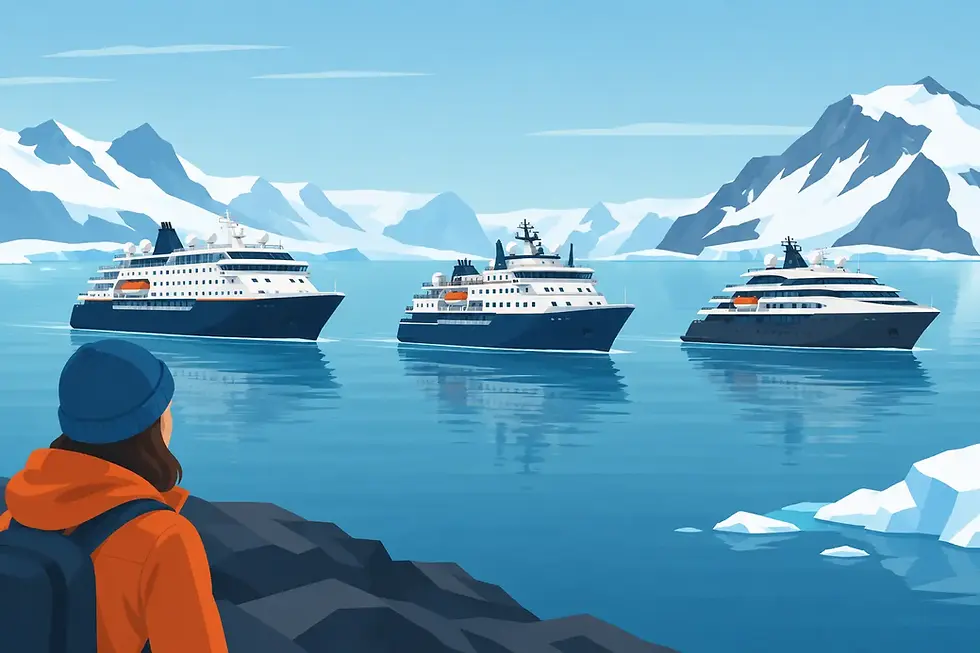
In polar travel, the ship shapes the holiday more than almost any other decision. Expedition vessels vary greatly in size, design, guiding philosophy and level of comfort. A beautiful suite matters, but it should not distract from practical considerations such as stability, outdoor access, the number of fellow guests and the expedition team’s experience.
Smaller ships can offer an intimate atmosphere and may allow all guests to participate in landings more efficiently. Larger ships can provide more onboard space, varied dining and wellness facilities, and a wider choice of cabins. Neither is inherently superior. A traveller who values sociable evenings and generous public areas may prefer a larger, refined expedition ship, while someone seeking a more private, immersive pace may be happiest with fewer fellow passengers.
Look closely at the ship’s polar credentials. Purpose-built expedition vessels typically offer strengthened hulls, well-designed mudrooms, ample viewing decks and fleets of Zodiac boats for shore operations. Stabilisation is worth discussing, particularly if you are concerned about the Drake Passage. It can improve comfort, though it cannot make an ocean crossing entirely still.
For some guests, a fly-cruise is the most appealing alternative. Rather than sailing both ways across the Drake Passage, travellers fly between Chile and Antarctica and join the vessel there. This reduces time at sea, but flights remain weather-dependent and luggage restrictions can be stricter. It is an elegant option for those short on time or anxious about rough water, provided flexibility is built into the plan.
Cabin location is a practical luxury
Once the ship is right, choose a cabin with care. Midship cabins on lower decks often feel the most stable in rougher conditions. Higher decks can offer better views and quicker access to lounges or outdoor spaces, but may feel more movement. A balcony is a lovely indulgence for private wildlife viewing, yet it is less essential if you expect to spend much of the day on deck and on excursions.
Prioritise easy access, quiet positioning and a cabin category that leaves room in the budget for the route and experiences you genuinely value. Antarctica is seen from the deck, the Zodiac and the shore, not only through a picture window.
Plan the journey around the voyage, not as an afterthought
The most polished Antarctic holiday allows generous breathing room at either end. International flights can be affected by weather, connections and airline schedules, while embarkation ports such as Ushuaia, Buenos Aires, Punta Arenas and Santiago require careful coordination.
Arrive at least one night before embarkation, and preferably two if the journey involves several flights or a separate ticket. This is not unnecessary caution. It gives you time to recover from long-haul travel, settle into the destination and protect the expedition from the consequences of a delayed connection.
A post-cruise buffer is equally valuable. Disembarkation times, charter flights and local weather can shift. Scheduling an international flight home too tightly after the expedition adds needless pressure to what should be a memorable final day. A well-chosen hotel, private transfer and a calm departure transform the bookends of the voyage.
Prepare for activity without turning the holiday into an endurance test
Expedition cruising is active, but it is not reserved for elite adventurers. Most landings involve stepping from a moving Zodiac into shallow water or onto a rocky shore, walking on uneven terrain and managing stairs aboard the ship. Weather can change quickly, and a flexible attitude is part of the experience.
Be candid about mobility, balance and any medical considerations before booking. Some ships are better equipped than others for guests who need additional support. A comfortable pace may mean choosing a voyage with fewer consecutive sea days, a ship with lifts and accessible public areas, or an itinerary where you are content to enjoy some moments from the deck rather than joining every landing.
Travel insurance deserves the same thoughtful attention as the itinerary. It should reflect the remote setting and include medical evacuation, emergency treatment, cancellation and interruption cover appropriate to the voyage. Policy terms vary widely, particularly around pre-existing conditions and weather disruption, so this is a detail to resolve early rather than at the final payment stage.
Pack for the conditions, not for the fantasy
The best Antarctic wardrobe is practical, layered and remarkably simple. Most expedition ships supply waterproof outer boots and, in many cases, a suitable expedition parka. Confirm exactly what is included before purchasing anything.
Bring comfortable base layers, insulating mid-layers, waterproof trousers, warm socks, gloves, a hat and eyewear with good UV protection. A small waterproof day bag, binoculars and a camera suited to cold conditions are worthwhile. Leave overly formal clothing at home. Evenings on board are usually smart-casual, and the atmosphere is refined without being ceremonial.
A reliable pair of gloves is especially valuable. You will want to hold a camera, use Zodiac handrails and simply stand outside longer when a whale surfaces nearby. Consider a thin liner glove beneath an insulated waterproof pair for greater dexterity.
Leave room for Antarctica to lead
Daily programmes are guided by weather, ice conditions and wildlife. A planned landing may become a scenic cruise through a newly opened channel; a quiet morning may become unforgettable when humpback whales appear beside the ship. This adaptability is not a shortcoming of expedition travel. It is the privilege of travelling in a place that has not been arranged around human timetables.
The most rewarding approach is to arrive prepared, comfortable and curious, then allow the expedition team to interpret the day. With the right ship, a considered route and well-managed travel arrangements, Antarctica feels less like a complicated undertaking and more like what it should be: a rare, deeply personal encounter with the edge of the world.
For a journey with this many moving parts, specialist guidance can be the difference between a good booking and a beautifully paced experience. Sleeping Giant Travel Co. can help align the voyage, ship and surrounding itinerary with the way you want to travel, leaving you free to watch the horizon rather than manage the details.


Comments