
Is Small Ship Versus Large Ship Cruising Right for You?
A cruise can be exquisitely appointed and still feel wrong if the scale does not suit the way you like to travel. The decision around small ship versus large ship cruising is not simply about passenger numbers. It shapes the rhythm of your days, the places you can reach, the level of personal attention you receive, and whether your time at sea feels restorative or busy.
For travellers who value comfort, cultural depth and a well-considered pace, the right answer is rarely found in a brochure photograph alone. It lies in the details: how you prefer to dine, how independently you like to explore, how much choice feels enriching, and how much feels like noise.
Small Ship Versus Large Ship Cruising: The Essential Difference
Small ships generally carry anywhere from a few dozen to several hundred guests. This includes most river vessels, expedition ships and boutique ocean yachts. Large cruise ships may welcome several thousand passengers and operate as self-contained resorts, with a considerable range of restaurants, entertainment and facilities.
Neither is inherently superior. A large ship can be an excellent choice for guests who enjoy variety, polished production shows and extensive onboard amenities. A smaller vessel tends to appeal to those who want the ship to feel like a refined base for the destination rather than the destination itself.
The more useful question is this: where do you want the emphasis to fall? On the life of the ship, or on the world beyond it?
The Appeal of a Small Ship
A small ship changes the texture of a journey. There are fewer announcements, fewer queues, and a more familiar atmosphere by the second or third day. The crew may recognise your preferred table, remember how you take your tea, or adjust the pace of service without being asked. That degree of attentiveness is particularly valuable on a longer voyage, when comfort is not a luxury extra but part of the experience.
Closer access to the places you came to see
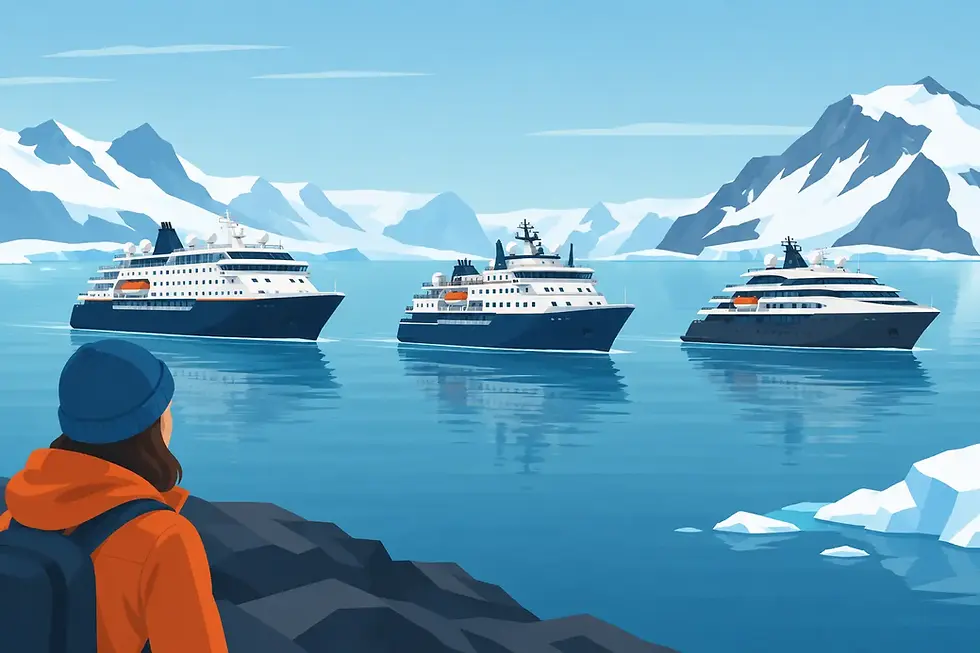
Scale often determines access. A river ship may berth in the heart of a historic town, allowing you to step ashore for an early morning walk before the day begins. An expedition vessel in the Arctic, Antarctica or the Amazon can use small landing craft to reach coves, channels and shorelines that a larger vessel cannot approach.
This does not mean every day is unstructured. Well-run small-ship itineraries are carefully organised, often with expert guides and a thoughtful choice of excursions. Yet the experience usually feels less processed. You may find yourself listening to birdsong on an Amazon tributary, meeting a local historian in a Danube city, or watching ice shift from a quiet observation lounge rather than navigating a busy terminal.
A more composed onboard atmosphere
On smaller vessels, public spaces are usually designed for conversation, views and unhurried time. There may be a library, a comfortable lounge, an elegant dining room and a modest wellness area, rather than a sprawling complex of venues. For many discerning travellers, that is not a compromise. It is the point.
Dining is often open seating or lightly structured, with menus that reflect the route and a service style that becomes personal rather than transactional. Evenings may bring a guest lecturer, local musician or simply the pleasure of a drink on deck as the landscape passes by.
There are trade-offs. A smaller ship has fewer restaurant choices, limited entertainment and less room to retreat if you prefer constant activity. Cabins can also vary meaningfully in size and position, especially on expedition ships, where the focus is access and capability rather than resort-style indulgence.
What Large Ships Do Exceptionally Well
Large ships offer a breadth of choice that smaller vessels cannot replicate. Multiple dining rooms, specialist restaurants, expansive spas, theatres, lounges, pools and enrichment programmes provide an appealing sense of possibility. For multigenerational groups, or for travellers who enjoy a lively evening and plenty of options at hand, this can be a genuine advantage.
They also tend to offer a greater range of cabin categories. A guest may choose anything from a practical inside cabin to a suite with generous outdoor space and private dining. On mainstream itineraries in the Mediterranean, Caribbean or Alaska, the scale of these ships can bring competitive pricing and plentiful departure dates.
For sea days, large ships can be particularly rewarding. Those who enjoy a full day of activities, fitness classes, shopping, music and entertainment may appreciate having a great deal to choose from without ever leaving the vessel.
The limitations are mostly practical. Large ships usually dock farther from historic centres, rely more heavily on tenders in certain ports, and arrive alongside many other guests. Popular spaces can feel crowded at peak times. Shore excursions often involve larger groups and tighter timings, though private arrangements can improve the experience considerably.
Consider the Itinerary Before the Ship
The destination should guide the decision. On storied rivers such as the Danube, Rhine, Rhône and Nile, a small ship is generally the natural format. The waterways themselves impose an intimate scale, and the pleasure lies in gliding past vineyards, castles, villages and city quays at close range.
In remote regions, small expedition ships are equally compelling. Antarctica, the Galápagos, the High Arctic and the Amazon reward flexibility, expert interpretation and the ability to go ashore in small groups. Here, a larger ship may provide more creature comforts, but it can place limits on where and how guests experience the environment.
Ocean itineraries are more nuanced. A large ship can work beautifully for a Mediterranean holiday that combines sea days with a broad range of ports, particularly if onboard dining and entertainment are part of the appeal. A small yacht or boutique vessel may be better suited to travellers who want smaller harbours, overnight stays and a less hurried connection with coastal life.
Questions That Clarify Your Best Fit
Rather than starting with a cruise line, begin with your preferred travel style. Consider whether you would rather return from an afternoon ashore to a familiar lounge and a small circle of fellow guests, or to a ship with numerous places to dine and spend the evening. Think, too, about your appetite for activity. Expedition cruising can involve uneven terrain, weather-dependent landings and early starts, while river cruising is often gentler and more predictable.
It is also worth being candid about mobility, privacy and energy levels. Larger ships may offer more lifts, facilities and cabin choices. Smaller ships often make movement around the vessel straightforward, but may have fewer accessibility features. The ideal cabin is not always the grandest category; location, natural light, lift proximity and time spent in the room all matter.
Finally, consider the social atmosphere you enjoy. Small ships tend to foster easy conversation and repeated encounters with the same guests. That can feel warm and civilised, or too familiar, depending on your preferences. Larger ships offer greater anonymity and more opportunities to set your own pace.
The Value of Expert Matching
The most satisfying cruise journeys are shaped by a series of decisions that deserve more attention than ship size alone. The route, season, cabin, embarkation city, pre- and post-cruise stays, flights and transfer timings all influence how relaxed the holiday feels.
At Sleeping Giant Travel Co., we see ship selection as an act of matching rather than ranking. A couple celebrating a milestone anniversary on the Nile may prize an intimate vessel and private guiding. Friends travelling through the Norwegian fjords may prefer the choice and energy of a larger ship. Both can be exceptional when the itinerary is designed around the travellers themselves.
A well-chosen ship should disappear into the background at the right moments, leaving you free to savour a candlelit dinner after a day in Vienna, a quiet sunrise over polar ice, or the simple pleasure of arriving exactly where you hoped to be. That is the standard worth planning for.


Comments