Small Ship Arctic Cruises for Thoughtful Travellers
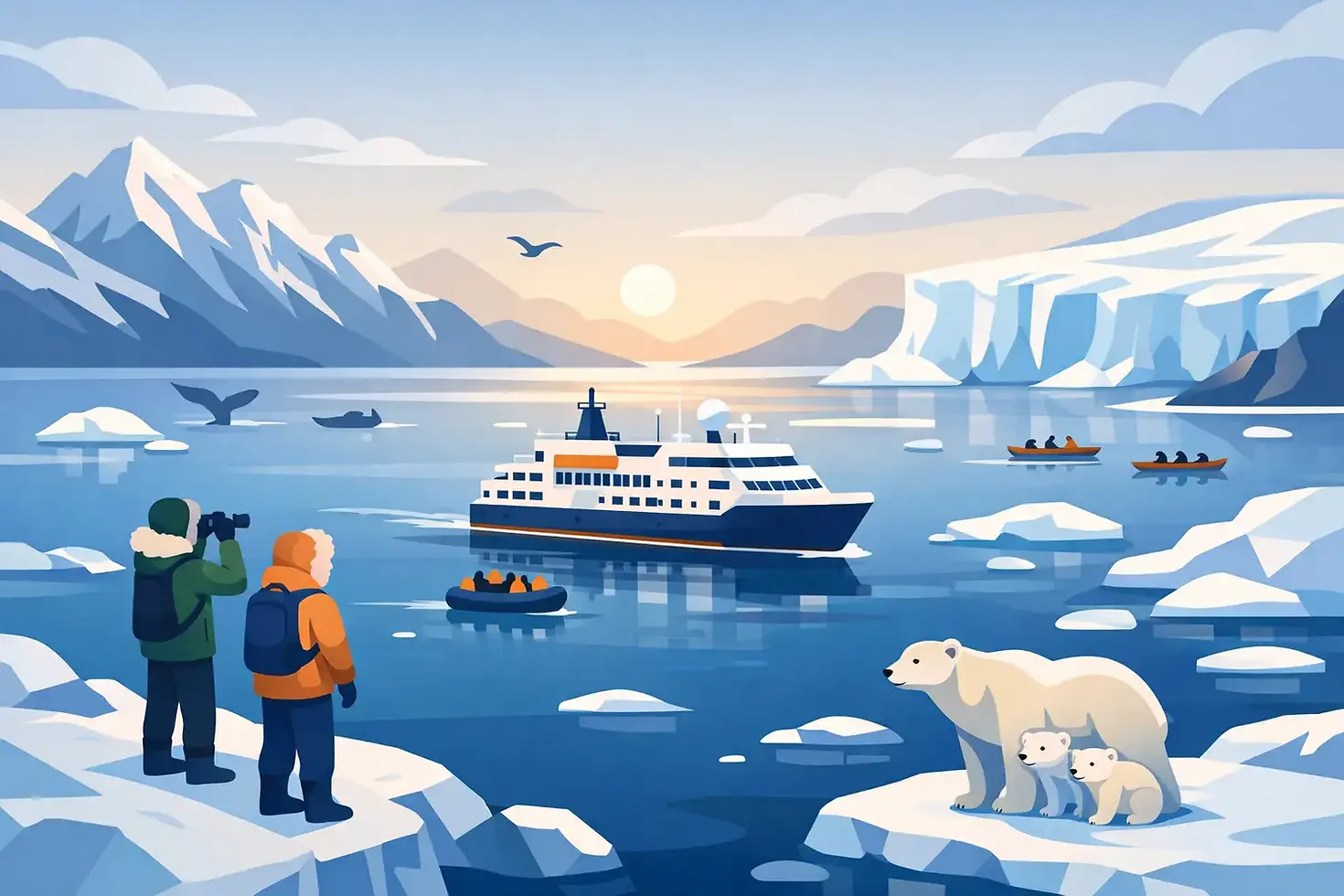
A polar bear on distant sea ice, a walrus colony stirring at the shoreline, the hush of a Zodiac crossing beneath a glacier - these are the moments that make small ship Arctic cruises so compelling. Yet the finest journeys are not defined by spectacle alone. They are shaped by the pleasure of returning to a well-appointed ship, the confidence of travelling with exceptional guides, and an itinerary that leaves room to absorb what you have seen.
For travellers who have outgrown crowded coach tours and fixed, hurried sightseeing, the Arctic offers a rarer kind of luxury: space, stillness and access. Choosing the right voyage, however, calls for more consideration than simply selecting the most dramatic map.
Why small ship Arctic cruises feel different
A small expedition ship typically carries far fewer guests than a conventional cruise vessel. This changes the rhythm of the experience. You may be able to land in places inaccessible to larger ships, travel ashore in intimate groups, and spend more time responding to wildlife, weather and ice conditions rather than following a rigid daily schedule.
The Arctic does not perform to a timetable. A captain may alter course to follow a pod of whales, remain longer near a productive bird cliff, or use a calm afternoon for an additional landing. On the right ship, this flexibility is not an inconvenience. It is part of the privilege.
There is also a quieter social atmosphere. Guests tend to share a genuine curiosity about natural history, photography, conservation and the cultures of the High North. Days are full, but evenings often settle into a civilised pattern: a thoughtful briefing, an excellent dinner, perhaps a talk from a glaciologist or historian, then the long northern light beyond the lounge windows.
That said, small ship does not automatically mean ultra-luxury. Some vessels are purpose-built expedition ships with elegant suites, refined dining and generous public spaces. Others are more practical, designed around field access rather than indulgence. The ideal choice depends on how much you value shipboard comfort alongside your time outdoors.
The Arctic itinerary is the real decision
The word Arctic covers an enormous region, and routes differ greatly in scenery, wildlife, cultural encounters and logistical complexity. A considered recommendation begins with what you most hope to feel and see.
Svalbard for ice, wildlife and dramatic landscapes
For many first-time polar travellers, Svalbard is the classic choice. The archipelago north of Norway brings together glaciers, steep mountains, sea ice and strong opportunities to see polar bears, walrus, Arctic foxes and vast seabird colonies. Summer voyages commonly operate from Longyearbyen, with itineraries varying according to the ice.
Svalbard is especially well suited to travellers who want a concentrated Arctic experience without the longer sailing distances associated with some Canadian routes. It is also a fine choice for those who prefer a week to ten days aboard ship, perhaps paired with time in Oslo or Copenhagen before departure.
Greenland for scale and culture
Greenland offers a different kind of grandeur. Icebergs tower in fjords, colourful settlements appear along remote coasts, and visits may include communities where Greenlandic traditions remain part of everyday life. West Greenland itineraries can combine spectacular ice with cultural depth, while voyages along the east coast feel more isolated and elemental.
Weather can have a greater influence here, particularly where sea ice governs access. Travellers who embrace expedition cruising understand that a revised landing plan is not a diminished holiday. It is often the route to an unexpected and memorable day.
Arctic Canada for passage, history and remoteness
The Canadian Arctic has a powerful pull for guests drawn to exploration history, Inuit culture and the mythic geography of the Northwest Passage. These voyages are often longer and more operationally complex, with substantial flight arrangements and fewer departure dates. In return, they offer profound remoteness and a genuine sense of travelling through one of the world’s great frontiers.
For the right traveller, this can be a landmark journey. It is best approached with time, flexibility and a ship that provides a level of accommodation and service equal to the scale of the voyage.
What comfort looks like in the polar regions
Luxury in the Arctic is not always marble bathrooms and formal evenings. It is a warm place to read while icebergs pass outside. It is having your outerwear prepared for the next landing, a knowledgeable expedition team who recognise your interests, and a crew who make a potentially demanding environment feel calm and well managed.
Look closely at the practical details. Cabin size matters on a voyage with changing weather, when an unhurried morning in your suite may be very welcome. So do stabilisers, lift access, the number of Zodiacs, the ratio of guides to guests and the availability of a doctor on board. Dining style, dietary provision and laundry service can also shape the ease of a longer expedition.
A newer ship may offer more polished interiors, larger suites and amenities such as a sauna or wellness area. A smaller, more expedition-focused vessel may provide a more intimate atmosphere and excellent access ashore. Neither is inherently superior. The question is whether the ship supports your preferred pace and standard of comfort.
Be honest about the physical side
Expedition travel is rewarding precisely because it brings you closer to the landscape. It also requires a reasonable degree of mobility. Zodiac embarkations can involve stepping between a moving boat and the ship, landings may be wet, and terrain can be uneven, muddy or snow-covered.
This need not rule out travellers who are not keen hikers. Many operators offer gentler walks, scenic Zodiac cruises and opportunities to enjoy the view from the ship. But it is wise to discuss mobility openly before booking. A well-matched voyage should feel invigorating, not like an endurance test.
Consider these practical questions before selecting a departure:
Are you comfortable with early starts when wildlife or weather warrants it?
Would you prefer daily walks, or a voyage with strong Zodiac-based exploration?
How important are a lift, balcony, larger bathroom or easy access to public spaces?
Do you enjoy an informal expedition atmosphere, or would you prefer a more polished onboard experience?
Can you allow a buffer night before and after the cruise in case regional flights are affected?
The final point is particularly valuable. Arctic travel rewards travellers who protect their schedule with sensible margins, especially around charter flights and embarkation ports.
Choosing the season with care
Arctic cruises generally operate from late spring into early autumn, but each part of the season has its own character. Earlier voyages can bring more snow, striking light and opportunities to encounter sea ice. Mid-summer offers long days, active birdlife and generally milder conditions. Later in the season may bring richer colours, changing light and, in some regions, improved access to areas that were previously icebound.
Wildlife is never guaranteed. Polar bears, for instance, are not a scheduled attraction, and responsible operators keep a respectful distance. A voyage should be chosen for the richness of the whole environment: the ice, the geology, the silence, the birds, the stories and the rare feeling of being far from ordinary life.
The value of tailored expedition planning
The most satisfying Arctic holiday rarely begins at the gangway. It begins with matching the vessel and route to your expectations, then arranging the journey around it with care. Pre-cruise hotels, suitable flight timings, luggage guidance, travel protection, special celebrations and post-cruise extensions all deserve attention.
Sleeping Giant Travel Co. approaches this as a considered, personal process. A first Arctic voyage might call for Svalbard aboard a refined expedition ship with a few restorative nights in Norway. A returning traveller may be ready for Greenland or an ambitious Canadian itinerary. In either case, the details should feel purposeful rather than overcomplicated.
The Arctic asks you to travel with curiosity and flexibility. Choose a ship that feels like a sanctuary, a route with room for wonder, and enough time at either end to arrive unhurried. Then let the far north set its own remarkable pace.


Comments