
What a Luxury Cruise Travel Advisor Really Does
A fine cruise is not defined solely by the suite, the Champagne or the view from the deck. It is defined by how naturally each part of the journey suits you: the right pace, the right company, the right balance of discovery and repose. A luxury cruise travel adviser brings clarity to those decisions, then attends to the details that let the holiday feel calm from the moment you leave home.
For travellers considering a river or expedition voyage, that distinction matters. The choice is no longer simply between destinations. It is between ships with very different atmospheres, sailing dates with different conditions, cabins that may change the experience, and shore programmes that range from gently cultural to genuinely demanding. Expert guidance turns an abundance of choice into a journey with purpose.
A Luxury Cruise Travel Adviser Begins Where Brochures Stop
Cruise brochures are designed to inspire, and they do that beautifully. They cannot, however, tell you whether a particular ship will feel sociable or too busy after dinner, whether the included excursions fit your interests, or whether a route offers enough time ashore for the way you like to travel.
A specialist adviser begins with a more useful conversation. Do you prefer a quiet morning on deck to a full schedule of guided visits? Would private touring add depth to a city you have long wanted to understand? Is this an anniversary journey, a long-awaited return to Europe, or an introduction to polar travel? The answers shape every recommendation.
On the Danube, for example, one traveller may be happiest with a classic itinerary through Vienna, Bratislava and Budapest, enhanced by a private concert or a considered food and wine experience. Another may prefer a less familiar stretch of river, where smaller towns and a slower rhythm take precedence. Neither choice is inherently more luxurious. Luxury lies in the fit.
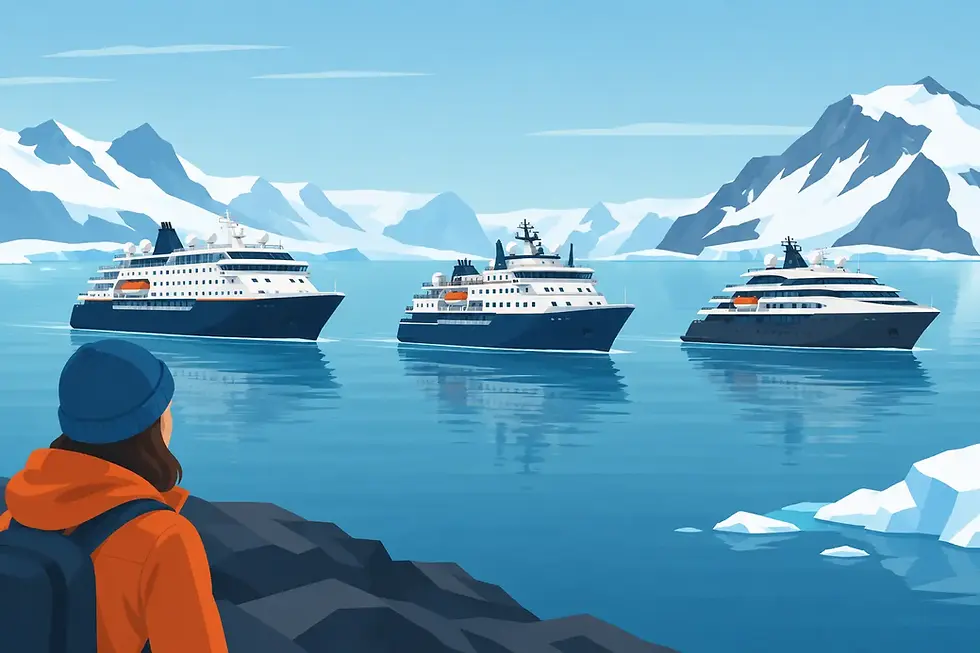
The same principle applies in more remote regions. An Arctic expedition may offer extraordinary wildlife encounters, but the experience depends on your comfort with flexible landings, changing weather and active days. Antarctica can be profoundly moving, yet it is not a conventional cruise holiday. A knowledgeable adviser explains these realities with candour, matching ambition with the right level of comfort and confidence.
The Decisions That Shape the Journey
Choosing the ship, not just the itinerary
Ships within the same broad category can offer distinctly different experiences. Some river vessels are intimate and understated, with generous public spaces and a quiet sophistication that appeals to travellers who value conversation and unhurried service. Others have a livelier atmosphere, more dining venues or a stronger emphasis on evening entertainment.
Expedition ships require another layer of consideration. The size of the vessel can affect how quickly guests go ashore, while the number of guides, the quality of expedition staff and the availability of equipment influence daily life on board. A larger ship may provide more facilities and choice. A smaller vessel may offer a more intimate feeling and greater agility. The better option depends on what you hope to remember most.
Cabin choice deserves the same care. On a river cruise, a suite may provide more room for a longer sailing, while a well-positioned standard cabin can be perfectly comfortable for travellers who expect to spend most of their time in the lounge or ashore. On an expedition cruise, the practical advantages of location, access and cabin layout may matter more than an expansive balcony. An adviser should explain the trade-offs plainly rather than assuming the highest category is always the best answer.
Finding the right pace and season
The same waterway changes character throughout the year. Spring on the Rhine brings fresh green hillsides and tulip season, although weather can be variable. High summer offers long days and an animated atmosphere, but popular cities are busier. Autumn can be especially appealing for vineyard landscapes, harvest flavours and a gentler pace.
In the polar regions, timing shapes what you may see. Early-season Antarctica often means dramatic ice and snow-covered landscapes; later departures can bring more wildlife activity and longer days. In the Amazon, water levels influence which tributaries can be explored and the kinds of encounters possible. There is no universally perfect month, only the season that best supports your priorities.
A thoughtful adviser also considers the rhythm around the sailing itself. An overnight stay in a gateway city may make a long flight more civilised. A few days in Cairo before a Nile cruise can provide context without crowding the itinerary. A carefully placed hotel stay at the end of the journey creates space to absorb what you have seen, rather than hurrying straight to the airport.
Beyond the Cruise Booking
The cruise is often the centrepiece, not the whole journey. This is where concierge-style planning makes a material difference. Flights, transfers, pre- and post-cruise stays, dining reservations, luggage requirements and special occasions all need to work together. A well-designed itinerary allows for the occasional delay or change of plan without allowing it to dominate the experience.
This coordination is particularly valuable for expedition travel. Charter flights, limited luggage allowances, specific clothing needs and port logistics can be less familiar than a traditional European river cruise. Good preparation gives travellers a clear sense of what is required, what is optional and what deserves attention before departure.
It also creates room for personal touches. Perhaps you would like a private guide in Amsterdam before boarding, a peaceful hotel overlooking the Nile, or a final evening in Buenos Aires after Antarctica. These additions should feel integrated, not tacked on. The aim is an effortless gateway to adventure, with every transition considered.
When Specialist Advice Matters Most
Independent research can be enjoyable, especially for experienced travellers. But cruise planning becomes more demanding when the journey includes several moving parts or when the stakes are high. A milestone birthday, a multigenerational holiday, limited mobility, dietary requirements or a once-in-a-lifetime polar voyage all benefit from a more personal level of attention.
Specialist knowledge is equally useful when cruise lines appear similar at first glance. Terms such as luxury, all-inclusive and expedition are used widely, yet their meaning varies. Included excursions may be plentiful but hurried, or fewer and more immersive. Dining may be informal and flexible, or more structured. One ship may suit a traveller who enjoys meeting fellow guests, while another is better for those seeking privacy and quiet.
The adviser's role is not to persuade you towards a particular sailing. It is to ask better questions, interpret the answers and offer a recommendation you can trust. That may mean suggesting a shorter voyage before a major expedition, choosing a less obvious departure date, or advising that a different river better suits your interests.
Questions Worth Asking Your Adviser
A meaningful consultation should leave you better informed, not overwhelmed. Ask how the adviser evaluates cruise lines and ships, what personal experience or specialist training informs their recommendations, and how they will tailor the time before and after your sailing. It is also sensible to ask who will assist if arrangements change while you are travelling.
Be open about preferences that may seem minor. The side of the bed, a dislike of large group tours, the need for an easy walking pace, a wish for a table for two, or the value you place on included drinks can all affect the recommendation. These details are not fussy. They are the practical foundations of a holiday that feels genuinely personal.
At Sleeping Giant Travel Co., the focus is on these considered choices: pairing discerning travellers with storied waterways, exceptional ships and an itinerary that honours their preferred way of seeing the world. The consultation is complimentary, but the thinking behind it is deliberately exacting.
The finest journeys rarely feel overplanned when you are living them. They simply unfold with confidence: a welcoming cabin, a well-timed transfer, a guide who brings a place into focus, and enough unclaimed time to watch the landscape drift by. Choose an adviser who understands that quiet ease is not incidental to luxury travel. It is the point of it.


Comments