
River Cruise Versus Ocean Cruise: Which Is Right?
- Sleeping Giant Travel
- 13 minutes ago
- 6 min read
Breakfast on the Danube might mean watching vine-covered hills and church spires drift past your table. Breakfast at sea may bring a horizon so wide it feels almost cinematic. A river cruise versus ocean cruise is not simply a choice between two types of ship. It is a decision about how you want to encounter the world: slowly and intimately, or expansively and with more choice at your fingertips.
For travellers who value comfort, cultural depth and thoughtful pacing, both can be exceptional. The better fit depends on the destinations that call to you, the rhythm you enjoy and how much of your holiday you want to spend ashore.
River cruise versus ocean cruise: the essential difference
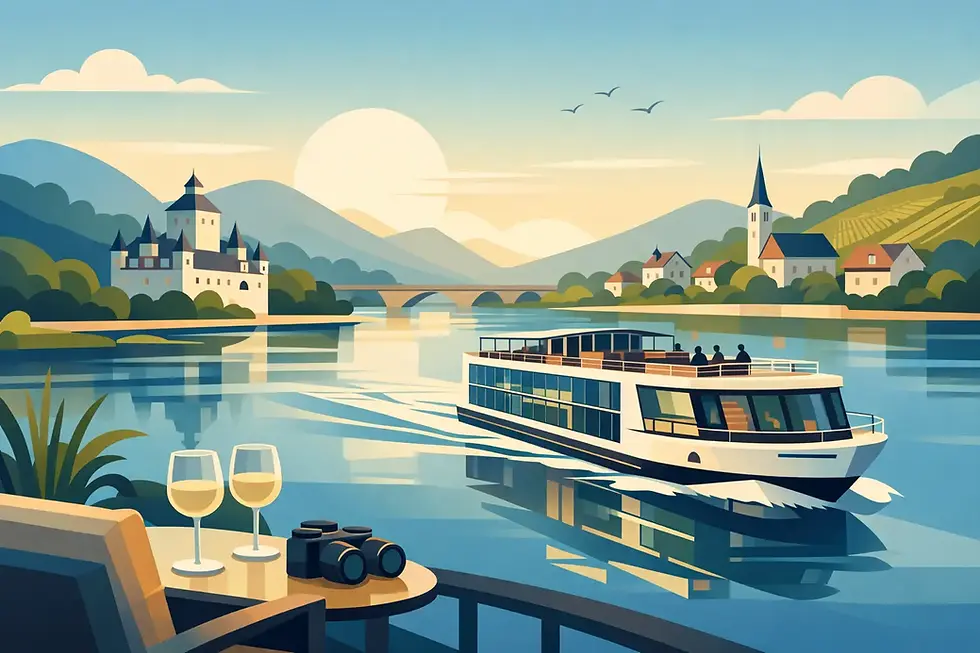
River cruising is destination-led by design. Ships travel along storied waterways such as the Danube, Rhône, Douro, Nile or Mekong, often docking close to historic centres. A morning in Vienna, a late afternoon in Dürnstein and an evening sailing through the Wachau Valley can all belong to the same day. The landscape remains part of the experience, whether you are on deck with a coffee or relaxing in your suite.
Ocean cruises are defined by scale and range. A single voyage can connect Mediterranean capitals, Caribbean islands, Alaska’s coastline or the ports of Japan. The ship is a significant part of the holiday, offering multiple restaurants, lounges, entertainment venues, pools and, depending on the line, extensive wellness facilities. Sea days create room to settle in, enjoy the ship and let the journey breathe.
Neither style is inherently more luxurious. Luxury takes a different form on each. River ships tend towards a quieter, more personal atmosphere with an emphasis on local food, guided discovery and a sense of place. Ocean ships can offer extraordinary space, choice and private retreat, particularly in premium suites or ship-within-a-ship concepts.
Pace: immersion or variety
A river cruise usually feels measured, yet it can be remarkably rich. Ports are frequent, and most days include an included or carefully arranged excursion. You may walk through a medieval town before lunch, visit a vineyard in the afternoon and return to the ship with little need for long coach transfers. For many mature travellers, this ease is one of river cruising’s great pleasures.
That said, river itineraries are not always leisurely in the literal sense. A keenly paced programme of walks, tastings, museum visits and evening events can be full. Guests who prefer a gentler day should look for lines that offer varied activity levels, bicycles or independent time ashore rather than assuming every tour will suit their preferred tempo.
Ocean cruising offers more flexibility between active days. A sea day can be a welcome pause after several port calls, especially on longer journeys. It also provides freedom: read by the pool, attend a lecture, book the spa or simply enjoy lunch with an ocean view. The trade-off is that some ports require tender boats, longer transfers or a shorter time ashore than travellers expect.
If your ideal holiday is built around waking up already close to the next town, river cruising has a clear advantage. If you enjoy the anticipation of arriving somewhere new after a restorative day at sea, an ocean itinerary may feel more balanced.
Ships and atmosphere
River ships are purpose-built for narrow waterways and low bridges, so they are smaller by necessity. Most carry roughly 100 to 200 guests. Public spaces are elegant rather than sprawling, and the atmosphere is sociable without feeling busy. After a few days, the crew know your preferred drink, fellow guests become familiar faces and the ship begins to feel like a well-run private club.
Cabins are generally compact compared with ocean suites, though premium river vessels make excellent use of space with French balconies, full balconies or both. On Europe’s rivers, lower-deck cabins may be closer to the waterline and have fixed windows. It is a detail worth understanding before booking, particularly for travellers who place a high value on natural light and an open view.
Ocean ships offer a broader range of accommodation, from well-designed inside cabins to expansive suites with butler service, private dining and exclusive deck areas. They also welcome far more guests. A small luxury ocean ship may feel intimate; a large contemporary vessel can carry several thousand passengers. This creates choice and energy, but it may not suit travellers seeking quiet sophistication at every turn.
The right question is less ‘Which ship is better?’ and more ‘How much choice do I want around me?’ A river ship is wonderfully focused. An ocean ship can feel like a floating resort, with all the possibility that brings.
The destinations change the decision
Europe is where the distinction is often most apparent. River cruises reach the heart of cities and smaller towns that ocean ships cannot approach. They are particularly compelling for travellers drawn to art, architecture, wine regions and the daily texture of continental life. A Danube voyage can link grand capitals with villages that would be inconvenient to visit independently, all without repeated packing and unpacking.
Ocean cruising excels where distance, coastline or islands are central to the experience. The Greek Isles, Norwegian fjords, the Caribbean, the South Pacific and Alaska are natural ocean-cruise territory. It can also be an elegant way to sample a region before returning for a longer land stay in the places that captured your imagination.
There are more specialised cases. A Nile cruise offers an exceptionally graceful way to experience ancient Egypt, while Amazon river voyages bring guests close to rainforest life in a way an ocean ship cannot. Expedition-style ocean cruising opens the Arctic, Antarctica, the Galápagos and other remote regions, pairing serious exploration with the reassurance of a well-equipped ship and expert guiding.
Shore time and how you experience a place
River cruise excursions are usually central to the holiday, and often included in the fare. Expect guided city walks, visits to landmarks, tastings and cultural encounters, frequently in smaller groups than those found on larger ocean ships. Because the ship may remain in port into the evening, there can be time for a concert, a relaxed dinner ashore or an unhurried walk after the daytime visitors have gone.
Ocean cruises can provide impressive shore programmes, from private museum openings to helicopter adventures, but the range can be vast and requires discernment. In popular ports, a ship’s arrival may bring thousands of visitors at once. Choosing the right excursion, departure time and ship size makes a meaningful difference to the day.
Independent travellers may appreciate both formats. River guests can often step ashore and explore with little preparation. Ocean guests can build in more varied private touring, although logistics are sometimes more involved. A well-designed pre- or post-cruise stay can transform either kind of voyage, allowing you to see a major city without trying to compress it into a few port hours.
Practical considerations that deserve attention
Mobility is worth discussing openly. River cruising often involves cobbled streets, walking tours and, depending on water levels and docking arrangements, crossing one ship to reach another. Ocean ships have lifts, wider public areas and more onboard alternatives, though historic ports may still involve uneven ground, tendering or lengthy walks.
River routes can also be affected by unusually high or low water levels. Reputable cruise lines have contingency plans, but an itinerary may occasionally require coach transfers or a ship change. Ocean voyages face their own variables, including weather-related route changes and missed ports. Neither should deter a well-chosen trip, but clarity about flexibility is part of travelling well.
Cost comparisons are rarely straightforward. River fares commonly include more: dining, selected drinks, Wi-Fi and excursions may all be part of the price. Ocean fares can begin lower, then rise with specialty dining, gratuities, drinks, shore tours and onboard spending. Comparing the full holiday cost, including flights, transfers, hotels and experiences ashore, gives a far truer picture than comparing brochure fares alone.
How to choose with confidence
Choose a river cruise if you want the destination in view for much of the day, prefer smaller ships and enjoy a holiday shaped by culture, cuisine and close-to-town exploration. It is especially suited to travellers who want a polished experience without the effort of changing hotels or coordinating transport between places.
Choose an ocean cruise if the voyage itself is part of the appeal, if you value a wide choice of dining and entertainment, or if your dream itinerary includes islands, dramatic coastlines or remote polar regions. It can also be ideal for multigenerational parties or couples who enjoy different ways of spending their time onboard.
The finest choice may be neither rigidly river nor ocean. A river voyage through central Europe followed by several nights in a favourite city can offer depth without haste. An expedition sailing paired with a considered land journey can turn a remarkable cruise into a genuinely defining holiday.
At Sleeping Giant Travel Co., the most rewarding itineraries begin with the traveller, not the brochure. Consider the view you want from your morning coffee, the pace that leaves you refreshed and the places you have waited years to see. From there, the right ship and waterway become much easier to recognise.


Comments